
| Matt Johnson Outdoors The Sunfishes |
| Matt Johnson Outdoors |
By: Matt Breuer
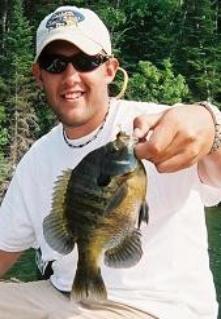
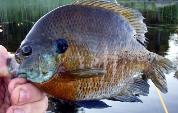
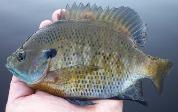
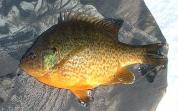
The sunfish family is made up of
many different species, many
which are not typically associated
with the word sunfish. Crappies,
largemouth, and smallmouth bass
are included in this category.
There are also a large number of
fish that many people would
simply call a “sunfish”. These
include such species as the
warmouth, pumpkinseed, red ear,
redbreast, green, hybrid, orange-
spotted, long ear, and the ever
popular bluegill.
Minnesota has bluegill, pumpkinseed, green, and hybrid
sunfish in many of it’s lakes. Other places they can be found
include man-made impoundments, rivers, streams, ponds, and
swamps. Within these waters the fish can be found roaming in
small loose schools, often not reaching more than 20 fish. The
bluegill is Minnesota's largest and most popular sunfish. It is
found in about 65% of the state's lakes and many of its slow
streams.
All of the Minnesota species fore mentioned are generally
carnivorous. They mainly eat aquatic insects and insect
larvae. Additionally, they will eat smaller fish, crayfish, and
snails. When other food is in short supply, they will also feed
on lake algae.
The breeding habits of the sunfishes are also the same.
Sunfish begin spawning when water temperatures reach
about 70°F. Spawning may peak in May or June, but
continues until water temperatures cool in the fall. Because of
their long spawning season, sunfish have very high
reproductive potential, which often results in overpopulation in
the face of low predation or low fishing pressure, thus stunting
the overall size of the fish in that particular body of water.
Nests are created in shallow water, one to two feet in depth.
Gravel bottom is preferred. Fifty or more nests may be
crowded into a small area, thus creating a spawning bed. A
single female can deposit more than 50,000 eggs., however
few females lay all their eggs in one nest, so each nest
contains the eggs of several females. Males guard the nest
until the eggs hatch and fry leave. Young fish feed on
plankton, but as they grow the diet shifts to aquatic insects
and their larvae.
Fishing for these small plentiful critters is a thing that can’t be
overlooked. All of us have memories of catching sunfish from
shore or a dock as a child. They are probably the best fish for
children, as they can often times provide non-stop action.
Adults can also get into fishing for sunfish as well. They are
pound-for-pound one of the toughest fish swimming, and are
great table-fare as well. Small jigs tipped with a small leech,
night crawler, wax worm, or small plastic can be effective
under a bobber. Beetle Spins and Poppers are also great
tools for late Spring and early Summer sunfish.
Sunfish are a very volatile species, and should be taken in
moderation. Size is also a thing one must look at when
determining their catch for the day. Big male sunfish ensure
that our children have the great panfishing that we’ve had
available to us. Remember to only keep enough for a meal,
and let the big boys go!
Take care,
Matthew J. Breuer
Northcountry Guide Service
(218) 444-6479
www.northcountryguides.com
The sunfish family is made up of
many different species, many
which are not typically associated
with the word sunfish. Crappies,
largemouth, and smallmouth bass
are included in this category.
There are also a large number of
fish that many people would
simply call a “sunfish”. These
include such species as the
warmouth, pumpkinseed, red ear,
redbreast, green, hybrid, orange-
spotted, long ear, and the ever
popular bluegill.
Minnesota has bluegill, pumpkinseed, green, and hybrid
sunfish in many of it’s lakes. Other places they can be found
include man-made impoundments, rivers, streams, ponds, and
swamps. Within these waters the fish can be found roaming in
small loose schools, often not reaching more than 20 fish. The
bluegill is Minnesota's largest and most popular sunfish. It is
found in about 65% of the state's lakes and many of its slow
streams.
All of the Minnesota species fore mentioned are generally
carnivorous. They mainly eat aquatic insects and insect
larvae. Additionally, they will eat smaller fish, crayfish, and
snails. When other food is in short supply, they will also feed
on lake algae.
The breeding habits of the sunfishes are also the same.
Sunfish begin spawning when water temperatures reach
about 70°F. Spawning may peak in May or June, but
continues until water temperatures cool in the fall. Because of
their long spawning season, sunfish have very high
reproductive potential, which often results in overpopulation in
the face of low predation or low fishing pressure, thus stunting
the overall size of the fish in that particular body of water.
Nests are created in shallow water, one to two feet in depth.
Gravel bottom is preferred. Fifty or more nests may be
crowded into a small area, thus creating a spawning bed. A
single female can deposit more than 50,000 eggs., however
few females lay all their eggs in one nest, so each nest
contains the eggs of several females. Males guard the nest
until the eggs hatch and fry leave. Young fish feed on
plankton, but as they grow the diet shifts to aquatic insects
and their larvae.
Fishing for these small plentiful critters is a thing that can’t be
overlooked. All of us have memories of catching sunfish from
shore or a dock as a child. They are probably the best fish for
children, as they can often times provide non-stop action.
Adults can also get into fishing for sunfish as well. They are
pound-for-pound one of the toughest fish swimming, and are
great table-fare as well. Small jigs tipped with a small leech,
night crawler, wax worm, or small plastic can be effective
under a bobber. Beetle Spins and Poppers are also great
tools for late Spring and early Summer sunfish.
Sunfish are a very volatile species, and should be taken in
moderation. Size is also a thing one must look at when
determining their catch for the day. Big male sunfish ensure
that our children have the great panfishing that we’ve had
available to us. Remember to only keep enough for a meal,
and let the big boys go!
Take care,
Matthew J. Breuer
Northcountry Guide Service
(218) 444-6479
www.northcountryguides.com

 |
| |
 |
| |
 |
| |
 |
| |
 |
| |
 |
| |
 |
| |
 |
| |
 |
| |
 |
| |
 |
| |
 |
| |
 |